
Showing posts with label Astronomy. Show all posts

Thursday, August 29, 2013

Posted Posted by Unknown in Comments No comments

Artist's impression of the Kepler telescope.

The Exo-planet hunting days may be over for NASA’s Kepler space telescope. Kepler was crippled earlier this year when a second of its four reaction wheels failed. Kepler relies on these reaction wheels to maintain its orientation in space. Without these reaction wheels Kepler won’t be able to lock on to subject stars with the absolute precision needed to monitor the dip in brightness as a planet passes in front of it.

 Although Kepler is equipped with thrusters, they just do not have the performance required to do its job.  Mission Engineers did get the two wheels running again but they are unable to function properly due to friction.  Repairs are out of the question as Kepler does not orbit the earth as does the Hubble space telescope, Kepler orbits the sun and simply cannot be reached by current manned spacecraft. Even if it did orbit the earth, the space shuttle would have been the preferred if not the only vehicle capable of facilitating a repair mission. Unfortunately the shuttle is no longer in service. So repairs are a definite no go.

With Kepler’s  Prime mission now at an end, Engineers are now trying to figure out what the space telescope is capable of in its crippled state.  Right now there are a few possibilities for Kepler.  It can be used to hunt for near earth objects (NEOs), Comets and even super nova explosions. There is even a possibility that it may still have some planet finding capabilities.  According to mission specialists Kepler could still find large planets by using a technique called gravitational micro lensing.  This is done by monitoring how light from the star is bent by the gravitational field of the planet moving in front of it. There is also the possibility that thruster and the two remaining reaction wheels can be used in concert to regain some functionality.


Kepler to date has discovered 134 confirmed exoplanets in 76 stellar systems along with 3,277 unconfirmed exoplanet candidates.
Monday, August 12, 2013

Posted Posted by Unknown in Comments No comments

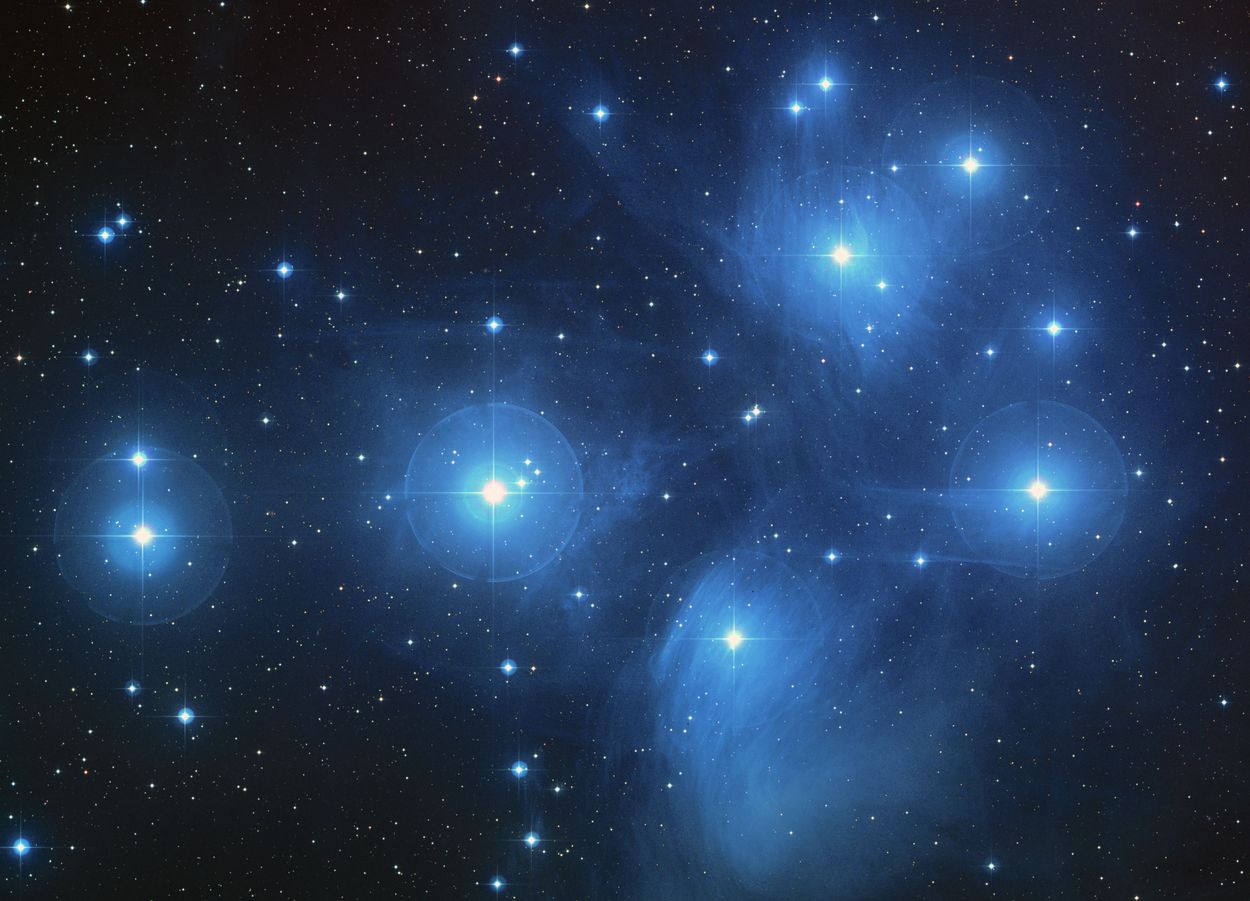
Credit: NASA, ESA and AURA/Caltech


Can you tell the difference between a star and a planet by just looking up at the night sky? Its simple really, stars twinkle and planets don't. +Universe Today publisher +Fraser Cain explains why stars twinkle (astronomical scintillation) and planets don't.


Thursday, August 08, 2013

Posted Posted by Unknown in , Comments No comments

Ever wondered what it takes to send humans to the international space station(ISS)? This video should shed some light. It explains the launch sequence of the Russian Soyuz rocket. With the Space shuttle now retired, the Soyuz is now the only spacecraft capable of launching humans to the ISS.


Video Source:ESA

Monday, August 05, 2013

Posted Posted by Unknown in Comments No comments


See that pale blue dot? Yea the one with the arrow pointing at it. That my friend is home to everyone and everything you know and love. The image was taken by the Cassini spacecraft on the 19th of July 900 million miles away! Cassini was launched on October 15th 1997 atop a Titan IV-B booster and arrived at Saturn on July 14th 2004.The spacecraft  was able to take this wonderful image by taking advantage of a rare total eclipse of the sun from Saturn. The eclipse allowed Cassini’s super sensitive cameras to snap the photo without risk of damaging its optical sensors due to direct sunlight. Kinda puts things into perspective doesn't it? From this far out earth is just another point of light in the vastness of space almost indistinguishable to surrounding stars. This isn't the first time that earth has been photographed from distance, various spacecraft have done so over the years. In fact the MESSENGER spacecraft that currently orbits mercury snapped a photo of earth and its moon at about the same time that Cassini did. The Voyager 1 probe now on its way out of the solar system also captured an image of earth known as the “pale blue dot”, the image was taken in 1990 from a distance of 3.7 billion miles.